Electric Nissan Figaro – 2020 Project Fig Leaf
James, another innovator on the journey towards creating an electric Figaro, brought his car along to the 30th Birthday celebrations in 2021.
BUILDER: JAMES BROWN
Builder: James Brown
Country: England
Date: March 2020 (Start)
Name: Fig Leaf
Range: 120 Miles (Target)
Charge Time: Pending
Battery Type: Lithium
Mission: The aim of Project Fig-Leaf is to convert our Figaro into an inspiring classic electric vehicle using components from the Nissan Leaf. By making this conversion straight forward and affordable, we want to encourage future conversions to update the Figaro for the 21st century.
Progress Updated – 28th September 2020
Member James Brown shares a video of the first Test Run, which includes the Speed Test, Torque Test, and reverse and regeneration braking test. The finished design is now undergoing testing with the new engine mounts and driveshafts. Next, he will be installing the drive system into the Figaro, and after some drive tests, the next step will be fabricating battery boxes and installing a charger.
How the Fig Leaf will work
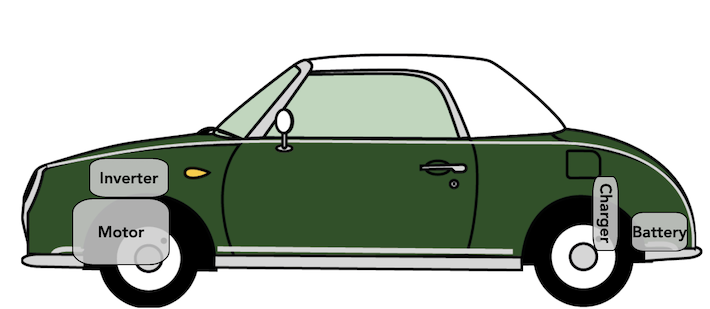
While all EVs vary significantly in design, there are some characteristics that they all have in common: They all use a method of storing energy (usually a high voltage battery). They all use motors to convert the battery’s stored energy into motion. They all need a controller (or inverter) to deliver the energy from the battery to the motor(s). Finally, they all need a way of recharging their battery.
In the case of Fig-Leaf, the battery will be stored in the boot. While this means you’ll need to find somewhere else to put your luggage, the weight distribution on the car will be a lot more balanced, meaning it should handle a lot better and brake more effectively.
You can see that the Leaf’s electric motor delivers energy to the front wheels in just the same way that the Figaro’s engine would. It’s actually much simpler as the electric motor uses far fewer moving parts and it is a lot more efficient, quieter, powerful and far more reliable. To give you an idea, the Leaf motor provides over 100bhp and over 200ft/lb of torque producing a top speed of around 82mph.
The motor gets its power from the inverter. This takes the direct current (DC) energy stored by the battery and converts it to an alternating current (AC) signal. The inverter also receives position information from the motor as it rotates so it can time this signal correctly, a bit like the valve timing on the Figaro’s petrol engine.
Unlike the Figaro’s engine, the Leaf motor delivers its maximum torque from a standstill. This means that whether you are pulling out from a junction or joining the main road, the Fig-Leaf will be able to accelerate when you really need it to. But the more power you demand and the faster you drive (cars create a lot of drag at higher speeds), the less efficient your car becomes and the quicker you will drain the battery.
When the car is fully charged, the aim will be for it to travel around 120 miles.
Just like filling up a petrol car, your battery will eventually need to be recharged. Like most EVs, the Fig-Leaf will have a built-in charger which will take power from an AC or DC source to charge the battery. Most modern EVs also use DC fast charging methods like CHAdeMO and CCS and this will be available for the Fig-Leaf at a later date.
Current Progress: After years of interest in electric vehicles and owning several Nissan Figaros (one that was destined for the scrap heap), the idea was born to create an electric Nissan Figaro using parts of a Nissan Leaf to make the Fig-Leaf as authentic as possible. Having researched many existing conversions, we visited Fully Charged Live in 2019 to ask the experts. Several companies who convert classic cars to electric confirmed that because of power losses from Figaro’s automatic gearbox, you would not be able to get very good range by simply swapping out the engine for a motor as has been tried in the past. So this got me thinking: What if you swapped the whole drive system? My online research led to Damien Maguire’s YouTube channels and as luck would have it, he was running an EV conversion course in October 2019 which I attended and learned the basics needed to start the conversion.
Meanwhile, the sad news came that our Figaro was beyond repair. This meant that we would need to source a replacement Figaro body to be able to build the car up from scratch. The next task was to find a donor Leaf. Thankfully we were able to source a 2013 Nissan Leaf from a scrape auction and so began the gruelling process of removing the components needed for the conversion. Once that was done, we set about reassembling and testing the electronic drive system outside of the vehicle. So far so good. Once testing is complete we will begin assembling the new drive system within the vehicle so we can make any final changes to the design. This is an ongoing project and currently, we are looking to source the right body shell (if you have one please get in touch). Once that is done we will be able to begin assembly.
Build Blog: James has recorded the build in a blog Read now
Picture Gallery (latest are posted at the bottom)
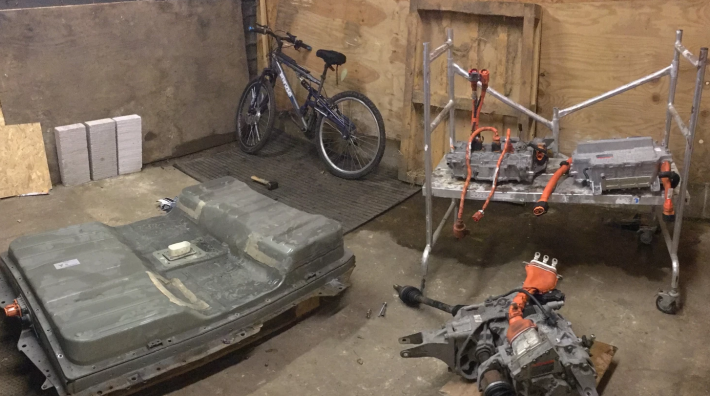
High Voltage Components. All of the HV components needed to convert your own vehicle to electric
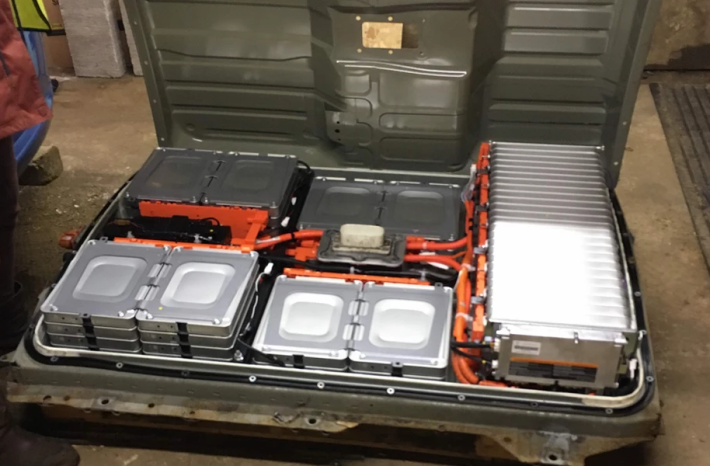
Open Battery. Now the battery is removed, it’s time to start disassembly
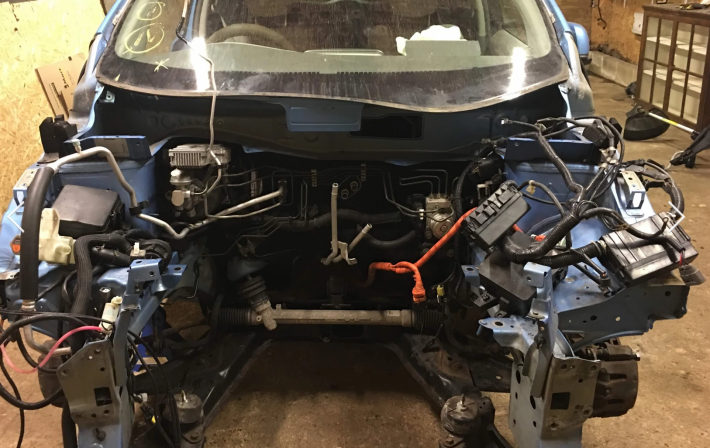
High Voltage Components Removed. Now that the usable components have been removed it’s time to have the Leaf recycled.
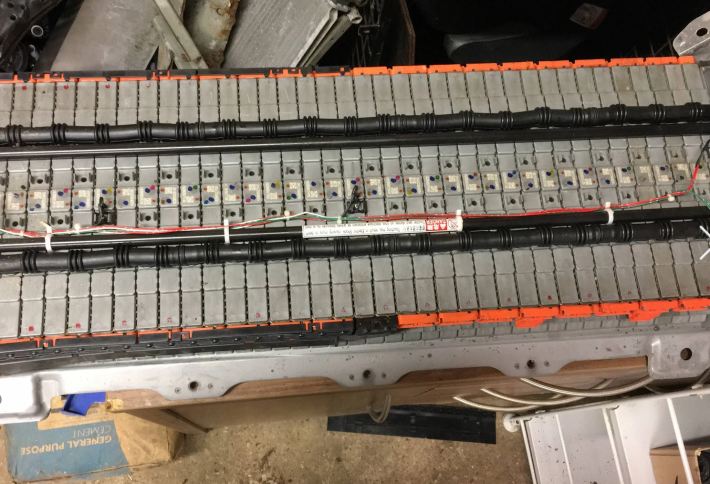
Prius Battery. The battery I bought for testing was completely DoA and worse still, it had been built from scrap cells so there was no chance of recovering it.
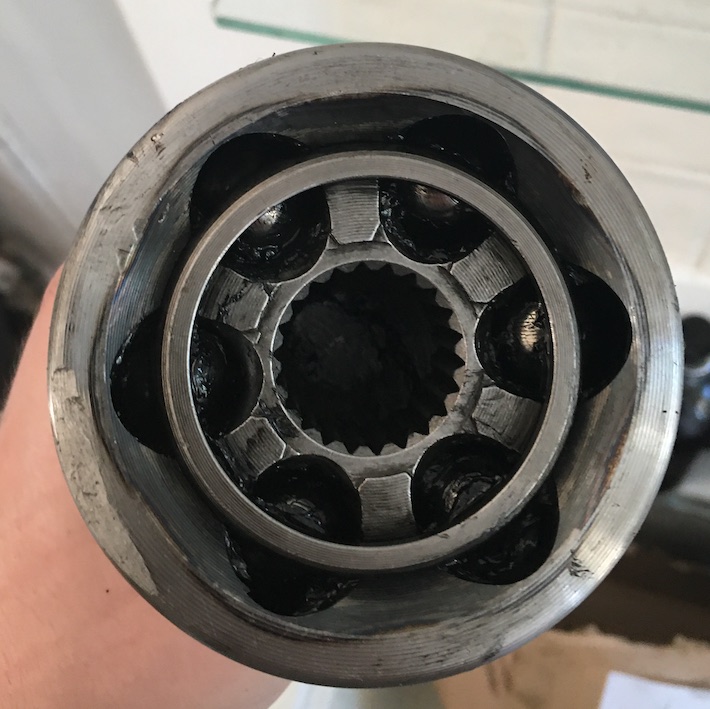
Things have been a bit hectic with work but the project is starting to come on leaps and bounds now. I’m just looking for an engineering firm to measure and turn the Figaro spline pattern onto the leaf outer CV joints. Then I should be in a position to mount the motor into the test frame and get the wheels spinning. 1st June 2020